UK Home students only
The menstrual cycle is characterised by dynamic fluctuations in reproductive hormones, particularly oestrogen and progesterone, which exert widespread effects across neuroendocrine, autonomic and metabolic systems. These hormonal changes have been associated with variation in stress, sleep, mood and emotional wellbeing across the cycle. Menstrual-cycle phase may also modulate hypothalamic-pituitary-adrenal axis activity and cortisol responses to stress, although the magnitude and direction of these effects vary between individuals and studies (1,2).
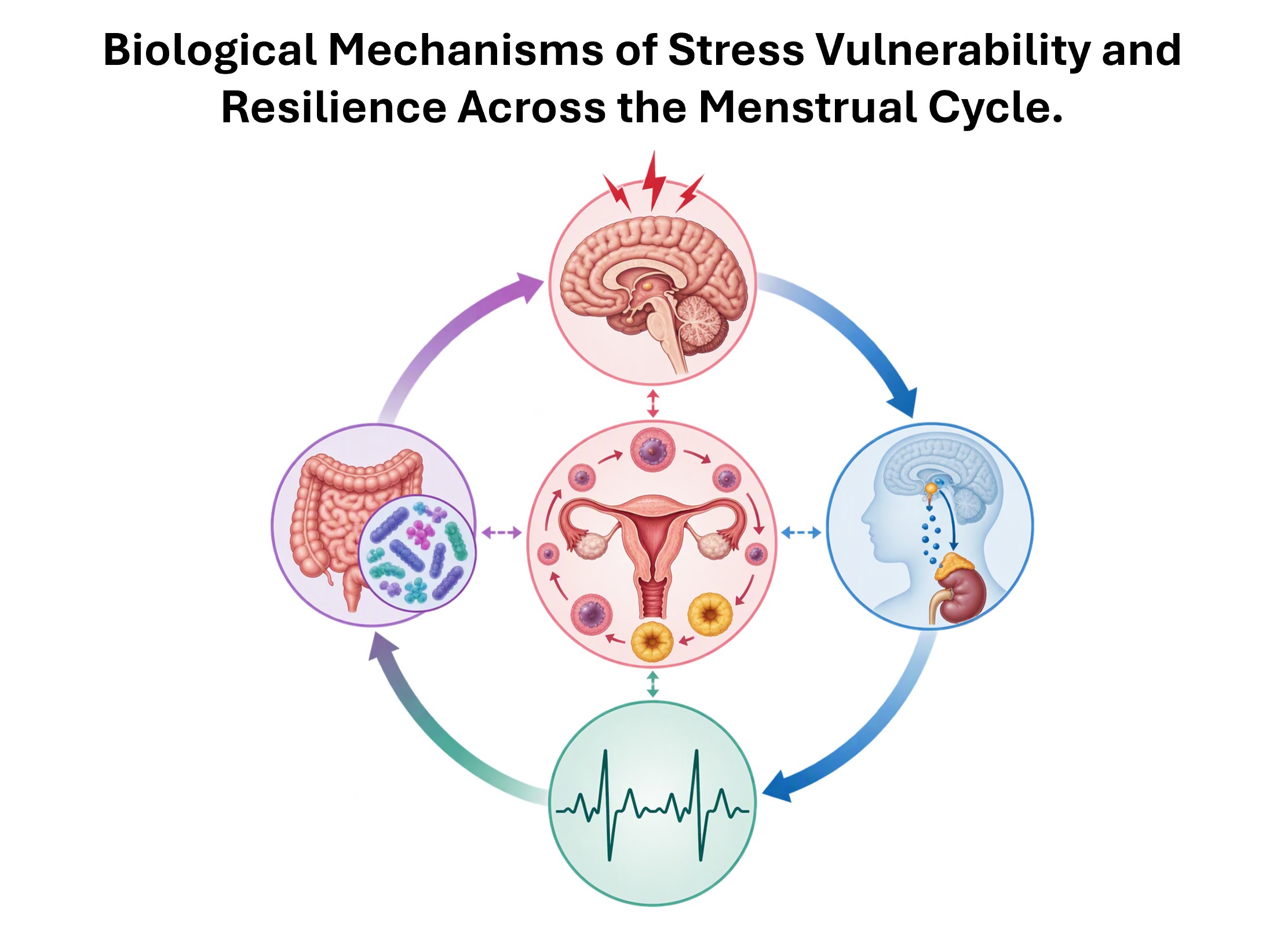
Importantly, responses to cyclical hormonal change are highly heterogeneous. Some people who menstruate experience pronounced premenstrual changes in affect, stress, sleep and wellbeing, whereas others experience minimal disruption. This variability is unlikely to be explained by absolute hormone concentrations alone and may instead reflect individual differences in sensitivity to hormonal fluctuations and their interaction with broader physiological and psychological processes (3). Reproductive hormones also interact with immune and inflammatory pathways, suggesting that menstrual-cycle-related wellbeing may emerge from coordinated changes across multiple biological systems rather than endocrine activity in isolation (4). Increasing evidence also points to bidirectional interactions between reproductive physiology and the gut microbiome, including potential effects on hormone metabolism, immune function and wider reproductive health (5,6). Understanding how these interconnected systems contribute to stress susceptibility or resilience therefore represents an important scientific challenge in menstrual health.
This PhD, based at the University of Liverpool in collaboration with Unilever, will investigate the biological and behavioural mechanisms underlying individual differences in wellbeing across the menstrual cycle. Using a longitudinal, multimodal approach, the research will characterise within-person variation in reproductive hormones alongside stress physiology, sleep, mood, menstrual symptoms and everyday wellbeing. Acute stress reactivity will provide an experimental framework for examining how physiological and psychological responses to stress vary across the menstrual cycle and between individuals.
The project will additionally investigate the gut microbiome as a potential component of this interconnected biological system. By integrating hormonal, neuroendocrine, autonomic, microbial, behavioural and psychological measures, the research will seek to identify multivariate profiles associated with susceptibility and resilience to menstrual-cycle-related changes in wellbeing.
This interdisciplinary PhD will provide advanced training in menstrual health, psychobiology, human experimental research, digital phenotyping, stress biomarkers, microbiome science and multimodal data analysis. Ultimately, the research aims to provide a mechanistic understanding of individual variability in menstrual-cycle-related wellbeing and establish a scientific foundation for more personalised approaches to supporting menstrual health.
Representative Publications / References
- Montero-López E, Santos-Ruiz A, García-Ríos MC, et al. The relationship between the menstrual cycle and cortisol secretion: Daily and stress-invoked cortisol patterns. International Journal of Psychophysiology. 2018;131:67–72.
- Hamidovic A, Karapetyan K, Serdarevic F, et al. Higher circulating cortisol in the follicular vs. luteal phase of the menstrual cycle: A meta-analysis. Frontiers in Endocrinology. 2020;11:311.
- Wan B, Chen W, Shan M, Chi L. Immune modulation by sex hormones: unveiling the complex interplay and regulatory networks. Frontiers in Immunology. 2026;17:1748097.
- Hoffmann K, Zsido RG, Villringer A, et al. Exploring the cortisol awakening response in premenstrual dysphoric disorder and in healthy females across the menstrual cycle. British Journal of Psychiatry. 2025.
- Sanna, S., Faro, V. L., Forabosco, P., Crobu, F., Carta, A., Busonero, F., ... & Camarda, S. (2026). Gut Microbiome Variation Across Menstrual Phases: Distinct Roles of Diet and Physiological Hormonal Fluctuations in Healthy Women.
- Ma, L., Yan, Y., Webb, R. J., Li, Y., Mehrabani, S., Xin, B., ... & Mazidi, M. (2023). Psychological stress and gut microbiota composition: a systematic review of human studies. Neuropsychobiology, 82(5), 247-262.