About UniDLA
UniDLA Partnership
This BBSRC-funded Unilever Industrial Doctoral Landscape Award (UniDLA) offers an outstanding opportunity for doctoral research and training and is a partnership between Project Lead King’s College London, Project Partner Lead Unilever, and Project Co-leads University of Liverpool, University of Manchester, and University College London.
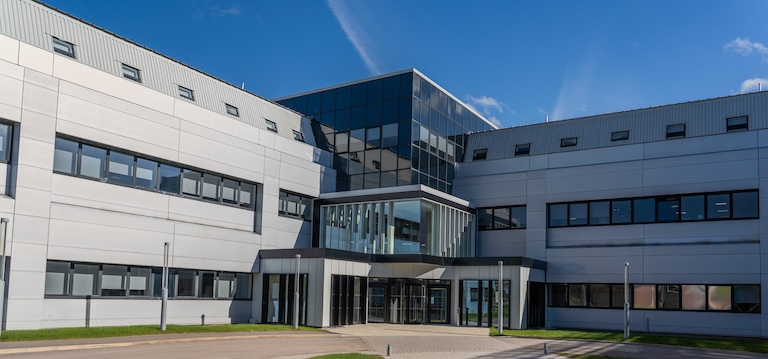
About Unilever
We are a global leader in consumer goods, with a heritage of pioneering innovation that improves everyday life.
We combine world-class science, deep consumer insight and global reach to create brands that inspire and ignite desire. Our products are sold in 190 countries and used by over 3.4 billion people every day. Our brands operate in four business groups Beauty & Wellbeing, Personal Care, Home Care and Foods. Our world-leading brands include Dove, Sunsilk, Vaseline, TRESemmé, Lifebuoy, Domestos and Hellman’s. Each day we help people enjoy cleaner homes, tastier meals, superior hygiene and more confidence from their beauty regimes. Our commitment extends beyond just improving lives; we’re dedicated to making our products good for the planet too.

Unilever Research Culture
Innovation is at the heart of everything we do within research and development at Unilever. With around 4,500 world-leading experts, including more than 500 who hold PhD’s we’re trailblazers in scientific research for our 30 power brands.
Our experts are pushing the boundaries of science and shaping the future of innovation, by leading in cutting-edge fields such as microbiome, biotechnology and next-generation packaging materials. Our product portfolio is protected by over 16,500 patents. Our pioneering work takes place in our global R&D centres, which are strategically located in some of the world’s most dynamic markers, the UK, US, India, China and the Netherlands. As a team, we’re dedicated to sourcing ingredients sustainably and pioneering ways to advance science without testing on animals, setting new standards in the industry.
Unilever has a strong history of collaborative scientific research with UK higher education institutions, including industrially focused PhD projects. The iDLA programme is the successor to BBSRC Collaborative Training Partnerships (CTPs) that have been led by Unilever for many years. Our students have presented their work at UK and global conferences, published in high-impact journals such as eLife, Scientific Reports and Frontiers in Molecular Biosciences and contributed to at least 5 patents. We have a 95% PhD completion rate since 2009, with 65% of our postgraduate students securing academic positions and 25% entering the private sector after completing their PhD.

About King’s College London
King’s College London is a world-leading university. Rated among the world’s top 21 universities, King’s is ranked sixth in the UK for the quality and quantity of its research activity and 11th in the world for its international performance and outlook.
Since its foundation in 1829 King’s has defined itself in term of its service to society, and it now has some 30,000 students and more than 8,000 staff members dedicated to making the world a better place. King’s uses its location in the heart of London to form and lead international conversation in policy, government, law, culture, religion, medicine and business.
Unilever and KCL have a long-standing history of collaboration, conducting 1st-class and industry-relevant research. This partnership has included 11 CTP/iCASE studentships since 2009. The iDLA will formalise this successful partnership at a new level, leveraging mutual knowledge of areas of interest to continue generating winning projects for the program. Additionally, Unilever maintains a "hub" of scientists embedded at KCL who actively initiate and scout for exciting project possibilities across the university.
About University of Liverpool
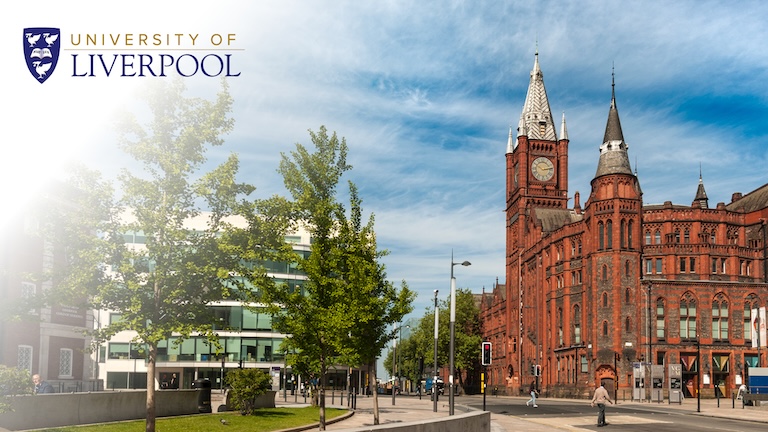
The relationship between the University of Liverpool and Unilever represents one of the most successful and long-standing academic-industry partnerships in the UK, spanning over a century since its inception in 1917.
At the heart of this collaboration is the Materials Innovation Factory (MIF) on the University of Liverpool campus, an £81 million state-of-the-art facility and co-founded by both entities to accelerate materials discovery through robotics and AI. This strategic alliance has secured significant funding, including an £8.8 million EPSRC Prosperity Partnership focused on sustainable chemistry and an £11 million grant from the UK Research Partnership Investment Fund (UKRPIF). The research interactions operate through a co-location model, where over 200 Unilever scientists work alongside university researchers in shared laboratories, fostering a seamless exchange of expertise in fields such as the human microbiome, formulation science, genomics and metabolomics.
These interactions have yielded high-impact research outputs, including hundreds of joint publications and patents that have directly led to the launch of first-to-market consumer products, such as advanced toothpastes and skincare lines. Beyond commercial success, the partnership is currently focused on pioneering green chemical supply chains to support the UK's Net Zero 2050 goals, cementing its role as a critical driver of both global scientific innovation, and regional economic growth.
About University of Manchester
The University of Manchester and Unilever have a long- standing partnership that spans our three faculties and brings together multidisciplinary expertise across science, engineering, health, and sustainability.
The collaboration includes major research programmes such as the Centre in Advanced Fluid Engineering for Digital Manufacturing (CAFE4DM) and Sustainable Materials Innovation Hub (SMI Hub), focusing on greener formulation polymers, sustainable packaging, and improving recycling systems. Biological and biomedical research collaboration spans pioneering projects, across chemistry, anti-microbials, dermatology, and pharmacy. The University of Manchester has a long-standing record in delivering industry-partnered doctoral training. Close collaboration with Unilever has been a big part of this success, providing >15 industrial partnership PhD projects in recent years. Working together with Unilever and our University partners, this new Industrial Landscape Doctoral Award (iDLA) programme will deliver exceptional training and development opportunities for doctoral students at the interface of academic and industrial research.

National Reach of the UniDLA Programme
Since 2021, BBSRC-funded Unilever studentships have been distributed among 30 higher education institutions in all regions of the UK allowing access to new developments, expertise, capabilities, and superior training in bioscience. UniDLA continues that geographical diversity, choosing projects not only at King’s, Liverpool, Manchester, and UCL but at locations where key scientific expertise is held.